Wednesday, January 26, 2011

Seminars for Growing Your Own Food

The interest in growing food isn’t waning. That’s why you’ll find lots of information about fruit and vegetable gardening at the Yard, Garden & Patio Show’s free seminars. Here’s a brief rundown:

Friday, Feb. 18 – Oh, Grow Up! Using Vertical Space in Your Vegetable Garden; Is Backyard Beekeeping for You?; and Seed Starting is Great Fun.

Saturday, Feb. 19 – Solving Problems in the Vegetable Garden Before They Get Started and Year-Round Edibles: Best Growing Techniques.

Sunday, Feb. 20 – Eat Your Landscape; Chickens in Your Backyard; 10 Steps to Your Best Tomato Year Yet; and Gourmet Gardening: Growing Your Own Groceries.

YGP Show Coupon

Upcoming Gardening Events

Farmington Gardens has some interesting seminars that might interest you. All classes are free, but please register at events@farmingtongardens.com.
                                               
·         February 6, 1 p.m. - What to do in the garden in February, with Marinda Parks. For those of you new to gardening, it can be a puzzle to know what to do in the garden seasonally.  Marinda will demystify all that, and give you concrete info to see you through the month.

·         February 9, 11 a.m. - Mason Bees with Beth Rose. The interest in mason bees keeps growing, especially as problems with honey bees persist nationwide.  This docile native bee is a great friend in the garden, pollinating like crazy.  Just a few simple steps will encourage mason bees to inhabit your garden. 

·         February 12, 10 a.m. - Birds in the Backyard, with Tom Combs. Birds not only fill an important role in balancing our backyard ecosystems (many of them love to feast on bugs and slugs!), but they are also fun and interesting to watch.  Tom will share how easy it is to entice birds by providing for their simple needs – housing and a food source. 

·         February 12, 1 p.m. - Dormant Sprays, with Tom Combs. Do you have questions about dormant sprays?  Learn the basics, for an easier and more productive season.  Tom recommends at least a February spraying.

·         February 13, 1 p.m. - Creating Pet-Friendly Gardens, with Melinda Frey from Raindrop Design, and Anne Taylor from Living Elements. As pet lovers as well as landscape designers, Melinda and Anne have developed strategies for creating durable, safe and sustainable garden spaces with your pet in mind.  It is possible to have the garden of your dreams and a contented pooch to share it with! 

At Dennis’ 7 Dees investigate these seminars:

·         February 12, 11 a.m. - Spring & Summer Bulbs. Ed Hobbs is a representative from Simple Pleasures Bulb Company and brings a wealth of experience and expertise to gardening with bulbs.  Focus will be on using bulbs in new or established gardens as well as in containers. Location: Cedar Hills Garden Center

·         February 12, 1 p.m. - Portland Rose Society Rose Pruning & Care. The past president will do a pruning demonstration just in time for cutting back roses in Portland gardens.  Topics of emphasis will be proper pruning techniques, optimal timing for pruning and general rose care.  Clipper/shear sharpening will be available to make the process easier! Location: Cedar Hills Garden Center

·         February 19, 11:30 a.m.-12:30 p.m. - Contemporary Containers. Want fabulous award-winning quality container plantings or you just don’t want to keep creating a new design for every season? Stacie will demonstrate how to design and plant a container for four-season appeal. Location: Yard, Garden & Patio Show at the Convention Center

·         February 20, 2-3 p.m. - Tips for a Low Maintenance Landscape. Take away effective tips for a low maintenance landscape, focusing on perennial beds, pruning and lawn care. These are tried and true tips for low maintenance. Location: Yard, Garden & Patio Show at the Convention Center

Check out Mike Darcy’s calendar of events for more garden-related activities.

Plants for Early Spring

Pining for spring? In the Pacific Northwest, there are lots of plants to collect in your garden that will get spring off to an early start and lift your spirits. I asked some of my gardening friends—designers, nurserymen/women and garden writers—what plants they considered their early spring favorites. I’ll share their responses over the next few weeks.

Linda Meyer, L Meyer Design and YGP exhibitor (booth #1473) – First choice is Helleborus 'Jacob' or Lenten Rose (basically any Hellebore, but this one and 'Ivory Prince' really show up during our lovely drab days!). Second is Gaultheria mucronata, aka Chilean Wintergreen (beautiful berries approx 1/4-1/2" in diameter and dark red stems with the deep green leaves). Corylopsis pauciflora, Edgeworthia crysantha, and Fothergilla gardenii round out my favorites.

Anne Marsh, Marsh & Fear Garden Solutions  – Viburnum bodnantense ‘Pink Dawn’ is one plant I recommend to every client as it provides a fragrant pink bloom from December through February. The structure of the plant as an upright shrub allows it to be placed in many areas of the garden, but I usually recommend it outside a front or back door where one can enjoy its year round beauty. Once it stops blooming the leaves emerge in early spring and they often turn a nice color in fall. The plant can be pruned to stay at 6’ x 6’ but I love to give it a chance to grow even taller and wider. Some of the best examples of this plant can be seen at the Bishop’s Close garden in SW Portland off of Hwy 43.

Brian Bauman, Bauman Farms and YGP exhibitor (booth #969) – Corylopsis spicata, aka Spike Winterhazel, is sweetly-scented with pale primrose-yellow flowers that appear in short chains along bare stems. It provides a pleasing show when few plants are in bloom. I’ll have lots of them in our booth at Yard, Garden & Patio Show.

Judy Kokesh, Judy Kokesh Garden Design LLC – One of my favorites is Rhododendron 'Shamrock'. It's a dwarf Rhodie (about 2' x 2') with a mounding habit and is tolerant of sun or shade and drought. Looks great all year, but especially when it blooms around mid-March. I have it in a darkish corner of my garden with some yellow Hellebores as companions and Hinoki cypress and golden bamboo as a backdrop. Its size and habit make it perfect for a small urban garden, but it could also be massed for impact in a larger space.

Lindy Rutherford, Cloud Country Landscape Design and YGP exhibitor (booth #1701) - I love Sarcococca ruscifolia or Sweet Box. It is one of my early favorites for its beautiful evergreen foliage, shiny dark green leaves and those sweet fragrant dainty white flowers that bloom in January. It’s such a profuse bloomer, does well in the shade and is great for those dark entryways or north facing walls.

Cindy Capparelli, garden designer - I ♥ Edgeworthia chrysantha, aka Chinese Paperbush, because it blooms on bare branches when everything else is sleeping and it smells lovely.

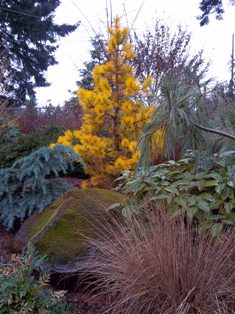
Treda McCaw, nurserywoman – My favorite is Pinus contorta var. latifolia ‘Chief Joseph Shore Pine’, a coniferous, evergreen, dwarf tree that turns a spectacular shocking gold in winter, just when the garden needs a bright spot.

Dan Heims, co-owner Terra Nova Nurseries - One of the most stunning plants in my garden is Dicentra spectabilis ‘Gold Heart’. Shade and moisture-tolerant, early, and showy, it’s in my top three perennials for early spring.

Phil Thornburg , Winterbloom Inc. and president of the Association of Northwest Landscape Designers (APLD) - One of my favorite all around plants is Osmanthus burkwoodii. It is a nice tidy easy evergreen medium sized shrub that can be a back ground or a focus plant in the Asian garden or planted as a formal or informal easy maintenance hedge. It blooms beautifully in late March with thousands of fragrant white blooms. They are fragrant and never grow crazily like a Photinia or a Prunus (English or Portuguese laurel).


Did you discover a new favorite? Something you want to try?

Good Intentions

Already the soggy community garden plot beckons. Barney, my adorable golden retriever, and I walk by it regularly in the local park. It doesn’t look very appealing at the moment; even the Tibetan prayer flags that flew above my tomato plants last year look sad and appropriately faded and ragged. Yet I just placed a call to see if I could “inherit” the abandoned plot next to mine.

Perusing an article in a recent issue of Urban Farm, it discussed crop rotation recommendations to minimize plant pests. Coincidentally, two of my favorite seed catalogs recently arrived in the mail: Nichols Garden Nursery (YGP booth #537 & 539) and Territorial Seed Company (YGP booth #554 & 556). Both will offer a good selection of seeds at the Yard, Garden & Patio Show.

I have a tendency to give into impulse and buy too many seeds. This year, I have a plan: Review my copy of Seattle Tilth’s "Maritime Northwest Garden Guide," select what I want to plant seasonally, map out my crop rotation, then spend some time selecting varieties from the catalogs before arriving at the Yard Garden & Patio Show. If I get that second garden plot, a trip to One Green World’s booth (YGP booth #336 & 338) will be in order for cane berries.

Good intentions? You bet! Actual probability that I’ll stick to my plan and not give into impulse? Mmmm...probably nil.

What varieties do you plan to plant this year?

Friday, January 21, 2011

Tallest Pine

On January 3, 2011, Mario Vaden and Michael Taylor found four very tall Ponderosa pines in the Siskiyou National Forest of southern Oregon; each is tall enough to be a new world's tallest pine (of any species). At 268 feet, the tallest is the new tallest pine tree in the world! They haven’t scoured the area so there may be even taller record-breaking pines thriving in the forest.

Michael Taylor is one of the two co-discoverers of Hyperion, a coast redwood and the world's tallest tree of any kind. He's been at this tree adventure and hunting for at least two decades. Mario Vaden is a Portland-area arborist and a big tree hunting enthusiast.

Mario writes: “For a size comparison, the 268 foot pine is as tall or taller than most of the coast redwoods in the 559 acres of Muir Woods National Monument in Marin County, Calif. A few sources list 258 feet as the tallest redwood in Muir Woods, which would put the four tallest Ponderosa above that redwood park's tallest Sequoia sempervirens. There are taller redwoods in other parks, but that still gives an appreciable height comparison for the thousands of visitors who have seen that national monument park.”

According to Wikipedia, the following are now accepted as the top ten tallest reliably measured species:

1. Coast Redwood (Sequoia sempervirens): 379.1 ft, Redwood National Park, Calif.
2. Australian Mountain-ash (Eucalyptus regnans): 326.8 ft, south of Hobart, Tasmania, Australia
3. Coast Douglas-fir (Pseudotsuga menziesii): 326.1 ft, Brummit Creek, Coos County, Ore.
4. Philippine rosewood (Petersianthus quadrialatus): 317.9 ft, Agusan del Sur, Mindanao, Philippines (it is possible that it is slightly lower, because the height might include Christmas decorations on the top of the tree)
5. Sitka Spruce (Picea sitchensis): 317.3 ft, Prairie Creek Redwoods State Park, Calif.
6. Giant Sequoia (Sequoiadendron giganteum): 311.4 ft, Redwood Mountain Grove, Kings Canyon National Park, Calif.
7. Tasmanian Blue Gum (Eucalyptus globulus): 297.6 ft, Tasmania, Australia
8. Manna Gum (Eucalyptus viminalis): 292 ft, Evercreech Forest Reserve, Tasmania, Australia
9. Shorea faguetiana: 289.7 ft Tawau Hills National Park, in Sabah on the island of Borneo
10. Alpine Ash (Eucalyptus delegatensis): 288.4 ft, Tasmania, Australia

Click here for more details about Mario and Michael’s tall tree discovery. Be sure to check out Mario’s photos of the California coast redwoods. He has beautiful photos of one of my favorite places on earth. If you’ve never hugged a redwood in its native environment, put it on your “bucket” list of things to do. Camping as a child in a redwood forest, I believed in “the little people” and fairies. It’s a magical place. (I know I’m gushing but I can’t help myself.) I insist. You MUST GO!

Wednesday, January 19, 2011

Strolling the garden path

By guest blogger Elizabeth Petersen

Photo: Elizabeth Petersen
Garden paths are especially important this time of year, when they keep your feet dry on the way to the compost pile. But they have year-round benefits too.

They define garden spaces and improve the year-round usability of the garden. They help manage rainwater, allowing it to permeate into the ground gradually rather than turning to mud. And they keep down weeds naturally.

Garden routes tend to materialize as you and your pets track down the ground going from one part of the garden to another. To make the route into a path, add charm and function to your garden, put down a thick layer of coarse wood chips for a soft feel underfoot and a casual elegance.

Cedar chips make great, long-lasting paths. They are lightweight, easy to use and don’t splinter; they are friendly to the native ecosystem; they decompose very slowly, so they last for years when applied deeply; and they smell and look great.

Where moles are a problem, lay down a barrier of permeable landscape fabric before spreading the chips to keep those pesky molehills from mucking up the path.

It’s great to have a garden project when the garden is asleep. Just get a pile of cedar chips delivered to the driveway (or pick up a load yourself if you have a truck), and spread the chips out in a good, deep layer (at least 3 inches, but more is better). Then, take a stroll.

Friday, January 7, 2011

The Plant List – Getting a Handle on Accepted Latin Names

By Gardennia nutii
I came across an amazing project this morning: The Plant List. The Royal Botanic Gardens, Kew and Missouri Botanical Garden are working together to list all known plant species and “provide the author or the name, the original place of publication, and whether the name is accepted or is a synonym for another name from data resources.” This project is part of the Global Strategy for Plant Conservation which was created to help retain world plant diversity. The tool was released in December 2010, and this first version includes species of Vascular plant (flowering plants, conifers, ferns and their allies) and of Bryophytes (mosses and liverworts).

I learned this morning that the lovely Spanish fir (Abies pinsapo) I acquired this fall was originally published in 1838 at a university in Geneva, Switzerland (long way from Spain).

Thursday, January 6, 2011

The Sustainable Garden

Many Portland area gardeners are focusing on sustainable gardening practices. This is nothing new, but what does it really mean to gardeners and garden design?
Photo: Jamie Coughlin


I want to install a rain capture system for about a quarter of my roof. Even though it’s not enough to water my entire yard for our dry summers, it will help keep a significant portion of the rain water from my roof on site, which is a tenet of permaculture practices. It also helps the city’s sewer system (and my water bill).

The January issue of Portland Monthly offers a short piece on downspout design and photos of creative downspout design that I though might interest you. The photos make me want to take up welding so that I could create a functional downspout art piece. I do have a copper rain chain (simple circular links) that empties into a rustic ceramic planter filled with aqua-colored glass slag. I’m pretty happy with it.

Downspouts and rain gardens aren’t the only things we need to consider for the sustainable garden. We need to be realistic about what we can do or we just might not do anything.

I was happy to hear that Cole Burrell will be speaking on the magic or myth of sustainable gardening at the Yard, Garden & Patio Show on Sat., February 19 from 2-3pm. I heard him talk about this very thing at the Perennial Plant Association’s annual conference in Portland last year and believe his approach is spot on. He’ll touch on how gardening practices impact the environment and the difference we can make by the way we approach garden design, planting and maintenance. And perhaps most importantly, how our approach fits within the larger regional habitat system.

Yard, Garden & Patio show seminars are free. Attending is a great way to become informed and inspired!

Monday, January 3, 2011

Garden Tool Maintenance

Perhaps this is as good a reason as any for me to make a new year’s resolution (something I seldom do): I know I should take better care of my gardening tools because (1) it will make my work in the garden easier and (2) it will make my tools last longer. I know this—in fact I’ve known it for years—but, I’ve never done it before and I’ve been gardening for more than 20 years! So, I hereby resolve that by the end of February my garden tools will be “maintained.”

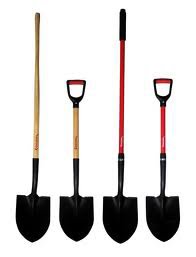
I have some great tools that I’ve purchased over the years. I’m especially fond of my Corona garden shovel that I purchased at Red Pig Tools (they helped me find the right-sized shovel for me; it’s a bit smaller than what you’ll find at a Home Depot or Lowes) and my triangular hand weeding tool (I got it from Smith & Hawken decades ago). Both are ready for sharpening. I have no excuse for not doing it other than I don’t think about it until I pull the tools out of the shed to use, at which point I don’t want to delay my work in the garden. I bought with good intentions a tool sharpening file and oil at the same time I purchased my shovel so I have what I need to get the job done.

I suggested in an earlier blog that giving the holiday gift of tool sharpening would be appreciated by any gardener. Alas, my holiday elves gave me other lovely things instead.

I’m embarrassed to tell you that I’ve had to throw out several good quality hand pruners because they corroded beyond redemption. Now I have several with dull blades that still work but I have to exert a lot more effort than would be necessary if I had sharp blades. So I vow to sharpen or replace the blades so that my fingers, wrists, arms, shoulders and back don’t have to work so hard.

For helpful tool maintenance information, follow these links: a brief “how to” by Kate Bryant, Portland Monthly’s garden blogger and more indepth information. I also read a suggestion somewhere—I think it was a Martha Stewart—to fill a five gallon bucket with sand, add a little motor oil, then dip your shovels and trowels in it after each use to easily keep the tools clean and oiled…something else I’ve been meaning to do for years.

You’ll find garden tools at the Yard, Garden & Patio Show presented by Dennis’ 7 Dees, February 18-20, at the Oregon Convention Center.

If you have tool tips to share with our readers, let us know.

Spring gardens shows!

Save the date for the 2011 Yard, Garden & Patio Show presented by Dennis’ 7 Dees: February 18-20 at the Oregon Convention Center. It’s the first garden show of the year in the Northwest and you’ll find bigger display gardens, seminars galore, garden art, garden designers and contractors, relaxing beverage gardens, cool plant displays and so much more. Visit http://www.ygpshow.com/ for details.


The following week, is Seattle’s Northwest Flower and Garden Show, February 23-27. If you don’t want to drive, think about joining other gardeners on a bus coordinated by the Multnomah County Master Gardeners up to the show. Here are details:

Don't sweat the drive when you can ride with fellow Portland area gardeners on a comfortable restroom-equipped bus. For $65 you get roundtrip transportation and a ticket to the show. You will have close to eight hours to see the gardens, stroll the vendors market and take in a seminar or two. Purchases can be stored on the bus for the trip home.
  • What: Northwest Flower and Garden Show, Washington State Convention Center, downtown Seattle. Bus transportation from Portland, Ore.
  • Date: Wednesday, February 23, 2011 (opening day)
  • Time: Loading of bus begins at 5:45 AM, leaves at 6:00 AM (Hollywood Fred Meyer at 3030 NE Weidler). Arrive in Seattle by 9am. Reboard bus at 4:45pm and return to Portland by 9pm.
  • Cost: $65, includes transportation and show entrance fee
Reserve your seat by contacting June Davidek, 503-477-8698. Reserve soon; the bus fills up fast!